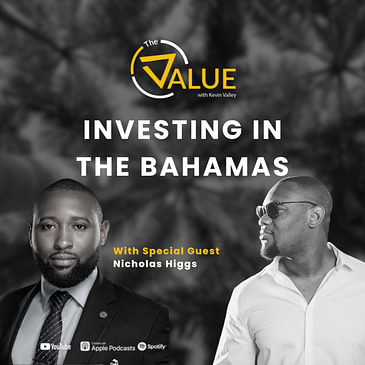
097: Investment Insights from The Bahamas | Nicholas Higgs
The Value with Kevin ValleyMay 07, 2024x
7
01:21:2774.58 MB

097: Investment Insights from The Bahamas | Nicholas Higgs

In this episode, we are with the Managing Director of The Bahamas Development Bank (BDB), Nicholas Higgs. Nicholas was also the Director and Chief Operating Officer for the Access Accelerator Small Business Development Center (SBDC), where he led the business development department. He is a Chartered Financial Analyst (CFA) with deep expertise in development finance, research, and capital raising. Here we delve into investing and raising funds in the Bahamas. Nicholas discusses his journey as a managing director, sharing insights gained along the way. He also emphasizes the importance of networking, tenacity, and expanding one’s horizons. Join us as we look deeper into the Bahamian economy and explore its investment opportunities. Highlights: [02:08] Taking on the role of Managing Director at the age of 31 [05:27] The value of networking and controlling your narrative [12:36] Overcoming fears and getting out of the box [19:00] The power of tenacity [24:43] The art of valuation [29:23] Nicholas’ insights on raising funds and securing deals [36:07] The Bahamian economy during the COVID-19 Pandemic [40:43] The Bahamas Development Bank and its rebranding [43:05] The Sleeping Giant: Bahamas’ Potential and Opportunities [48:11] Investing and raising capital in the Bahamas [51:38] Crowdfunding in the Caribbean [53:45] The BDB’s vision and goals [59:22] BDB’s fund allocation [01:00:39] How do you present your business for financing [01:05:19] Common misconceptions about investing in the Caribbean [01:10:57] Nicholas’ upcoming podcast: Mastering Finance Resources Episode Video Mastering Finance: The Podcast

[00:00:00] The goal is simply to create this bank into a $100 million bank. We want to get up to $100 million,

[00:00:06] like what's our group at Demokorov, we're selling to start $100 million, that's the goal.

[00:00:10] And so we want to build that up and we should be looking at how we're going to get it done.

[00:00:14] It's very feasible. Once you sit down and strategize and plan, it is feasible to execute.

[00:00:19] And so you just have to build. The first set will be harder and as you do that right,

[00:00:23] it'll be easier and easier and easier. The Bounce Bank Bank allows more than just

[00:00:27] loans, it allows equity investment, it allows a lot of different opportunities. And so I just want to

[00:00:32] allow us to reach out and try these new things. And so that's how we end up with the relationship

[00:00:36] with the C50 Studios. And so the RRSB might really try to focus on growing different

[00:00:42] revenue streams for the bank but also different innovative forms of financing for our clients.

[00:00:59] Podcasts World, welcome to another episode of The Value, the language of business

[00:01:05] with those of you seeking to build or invest in companies that are scalable and highly valuable.

[00:01:12] Today we're talking about investing in the Bahamas and we are with none other than

[00:01:20] leader, business development consultant, a real Bahamian patriot in the form of the

[00:01:27] managing director of the Bahamas Development Bank, Mr. Nicholas Hicks. Nicholas, how you doing?

[00:01:34] I'm doing excellent, so thank you so much for this opportunity. This will be my first formal

[00:01:40] podcast that I've ever done. Sorry to stress you out with the lights and the headphones and all

[00:01:46] that stuff. No problem, I appreciate it. It's a very blessing opportunity to

[00:01:56] be speaking to an international podcast for my first one. I'm so excited to speak to

[00:02:02] your listeners. I'm excited to just expand the reach and just talk about the Bahamas.

[00:02:09] I want to start with something I read, right? So in June 2022 it was reported that the Bahamas

[00:02:20] Development Bank is hiring a new managing director, somebody who's at the tender age of 31 years old.

[00:02:32] What was that? How did that feel for you, having the input, that level of responsibility? I mean,

[00:02:39] of course there's a level of success and achievements and everything, right? But how

[00:02:43] do you feel to have that level of responsibility put on you at that age?

[00:02:49] You put it like that. It really adds some context. I'm 31, man. I didn't remember being

[00:02:55] that young. I'm 33 now and going through the experience and learning from the bank and

[00:03:01] learning from the industry. There was a lot of pressure and a lot to learn in. I really recommend

[00:03:09] to persons, have mentors, persons to help guide you through the process. I went through being 31,

[00:03:15] government institution trying to build a bank up. It is not easy. And so a big thing for me

[00:03:21] was mentorship. So it was a lot of my shoulders but persons helped guide me through the process.

[00:03:26] So I know it's very early on but I have to say that the mentorship really helped guide me through

[00:03:32] this. For topics like these, I'd love to see how much we could visualize it, right?

[00:03:37] You know, to make it that much more tangible for the listeners and you watch us on YouTube.

[00:03:45] Thank you for subscribing. So if I'm to look at your life as a movie,

[00:03:54] for the three to five years prior to you being hired at that role at the Bahamas Development Bank,

[00:04:02] what am I seeing from your lens? Repeat that question. This is a beautiful question. Let me make

[00:04:07] sure I heard that right. Say it again. So if I'm looking, if I'm watching a movie,

[00:04:12] if I'm looking at it from the form of a movie, I'm looking at your life for the three

[00:04:18] to five years prior to you being hired as the managing director at the Bahamas Development Bank.

[00:04:24] What am I seeing from your lens? Bottle Star Galactica Star Wars is going to be,

[00:04:30] it's an adventure. It's going to be worlds going from different places to others. So

[00:04:35] most persons talk about my experience in the brokerage house company I used to work for and

[00:04:41] where I was dealing with researching developing companies and, oh sorry, assessing companies

[00:04:45] and assessing whether we should put those in the portfolio or not. And then moving to the small

[00:04:50] business development center, we are developing these companies, funding them. The first company

[00:04:55] prepared me for the second but they were so vastly different in responsibilities. One,

[00:05:00] I'm just researching the next one I'm leading at some point 25 staff members. And so across

[00:05:06] different operational positions in the company. So it would be something like Star Trek, something

[00:05:12] where it's just no worlds being found, every experience is something brand new and just happy

[00:05:18] the lessons before that prepare you for the curtain. Some real adventures, some real out of

[00:05:23] this world adventures. Okay, lovely. So in 2023 your high school alma mater, Lamoyne College,

[00:05:33] they named you out of the thousands, thousands of past students. They named you as the emerging

[00:05:43] leader of the year. And you gave a nice speech which I watched and I listened to. And I want

[00:05:51] to touch on three points that you made during that speech. All right? And not so much points

[00:05:58] as they are lessons, one being the value of the follow up being tenacious in your goals.

[00:06:05] Secondly, don't get married to the label of who you are, whether you gave yourself the label

[00:06:11] or whether society gave you that label. And three, networking and the importance of control

[00:06:17] in your own narrative. And thank you for watching the video first. I'm actually really

[00:06:22] impressed. I just, this is interesting. So thank you. I'll start with the networking one. That

[00:06:28] is the most important thing that has helped my career out of everything. Being able to

[00:06:35] approach persons where they should link them or where there is at a restaurant or the library,

[00:06:40] having the confidence to send that email and say, I'd like to have a conversation

[00:06:44] and mastering the skill, not perfecting it. I still have a lot more to learn

[00:06:47] but really becoming, you know, mastering it and just getting better every day and seeing how

[00:06:52] the responses are becoming better and easier. And now you're seeing persons coming to you,

[00:06:56] but that's not where I started. At LaMoyne, they had no connections. I was a Bahamian living in New

[00:07:02] York and not New York City. Sarah Q. It was only one Bahamian and I was what, 19 and he was 30.

[00:07:14] He was older, got the same opportunity as myself. And so I didn't really have any friends. I was,

[00:07:22] we were close and I just started developing my network. And the biggest area I saw the success

[00:07:26] is when I started going to my career services department. And I would go there and again,

[00:07:31] I'm a black and I have a slight accent and you know, I don't have the community around me.

[00:07:38] So I'm a career services. How do I get a job? How do I get America to let me stay here and

[00:07:41] give me an opportunity? And so I go there every day, weeks, months, looking at different resumes

[00:07:48] as in banks. She will show me how to craft it to this company versus that company. She said,

[00:07:54] take that word out because it works for this company. But you put it here, it gives a different

[00:07:58] narrative. And so it was heavily focused on what are you trying to get from this person?

[00:08:03] What are you trying to present to the person? And so he just was, she was awesome and that

[00:08:08] was a magnificent one for me. What was the second one?

[00:08:11] I was, don't get married to the label of who you are.

[00:08:14] Me tell you, don't get married to that label. And you know, it's interesting, but that is

[00:08:17] even for me recently in life, you have to make sure that you understand the

[00:08:24] narrative you're trying to give to the public. And so me, I'm the manager and director of

[00:08:28] the pharmaceutical bank. Should I sit here and say for the rest of my life, I must be a

[00:08:33] managing director. Should I always say the experience of the high pressure work is that

[00:08:38] what I should have for the rest of my life? What if I say, you know, one day I want to

[00:08:43] go sit on the beach and I want to fish and just, you know, that's there's nothing wrong

[00:08:47] with that. What if I want to transition in construction? You know, it just,

[00:08:51] there's a whole concept of that point was not for me to say, not be focused.

[00:08:56] But don't say this is who I am. And you find that happens, especially persons

[00:09:00] very young. I want to be a doctor, I want to be a dentist or I'm going to be a lawyer.

[00:09:06] And they kind of get stuck to that or similarly they'll say, I'm not the doctor place and I'm

[00:09:10] not the numbers person. Instead of saying, you know, right now I'm having chances at that.

[00:09:14] But I do understand the importance of numbers. So I'm going to get better with that

[00:09:17] as I need to. Persons can't get married to these boxes they put themselves into.

[00:09:22] And so that whole concept was just don't put yourself in a box.

[00:09:25] You can do whatever you would like to do. Just put your mind to it.

[00:09:28] I agree. That is something that you see so, so much and especially as the world keeps evolving.

[00:09:36] And then you have technology that could supplant wherever you have deficiencies, right?

[00:09:43] Correct. But I actually want to ask you a question on that.

[00:09:47] Well, on the networking side, how with you we're both in two different countries.

[00:09:52] So how do you, how do you do the networking and how did you even see an opportunity to say,

[00:09:56] I'm a retail person's outside of my career? Man, I've been going hard on LinkedIn probably since 2012.

[00:10:03] I want to say, you know what I did around that time, 2011, 2012, I did a career

[00:10:10] reverse engineer exercise, right? At the time, I was an equity analyst at RBC covering tech,

[00:10:17] media, telecom or whatnot. And I was trying to decide, okay, where does I want to end up

[00:10:22] in my life? Where do I want to, where do I want to see my career going? You know,

[00:10:25] what's funny is that I put at the end of my career, I want to put a, I put consultant

[00:10:30] slash business valuation professional slash, you know, so something similar to what I have.

[00:10:33] Then I was like, now I'm like, hmm, I should have aimed higher.

[00:10:39] But yeah, so I reversed and I reverse engineers. I started at the end of where I wanted to

[00:10:44] end up. And then I was like, okay, so what, what do I need to achieve before that?

[00:10:49] Right. And then I think I put like some sort of senior manager, I put options, right?

[00:10:54] Depend on different parts. So I said it could have been either investment banking,

[00:10:58] it either been equity research, it could have been this pure, pure valuation professional

[00:11:04] services, right? And then I did it till I was back to where I was at RBC.

[00:11:09] All right. So that's what I did. So I said, all right, I'm, if I want to achieve this,

[00:11:14] I mean, everybody has talent, right? Everybody, everybody's educated, right? And if you think,

[00:11:21] and this is a common mistake too, a lot of people think that, okay, I have these skills.

[00:11:25] My skills to just speak for itself only to a certain extent, only to a certain extent,

[00:11:32] right? Because when it comes to actually getting things done, you know, and I'm not talking

[00:11:39] about rivalry, I'm not talking about nepotism or anything like that. I'm talking about networking.

[00:11:46] There's no any right people having, having people know you, right? And I'm not saying it has to be

[00:11:51] transactional either is all relationship, relationship based, right? We're all people.

[00:11:57] Yes, we have different roles, but we're all, we're all people and we like,

[00:12:00] we like to work with people that we like because one big aspect of, okay, should I pick

[00:12:05] Nicholas or should I pick the other guy? If they, if they evenly match skill-wise, they say, okay, well,

[00:12:12] who would I, who would I rather work with? Who do I actually enjoy work with? Who

[00:12:16] would I want to sit on with during a tough, tough, a tough time? Right? If I have a big

[00:12:22] challenge, who do I want to, who do I want to be pulling Europe alongside me? You know,

[00:12:27] so all of those, those intangible things matter so much. And I would, I would even beg to argue,

[00:12:32] they matter more than the technical. Yeah, you sometimes find in my experience, sometimes if

[00:12:39] you don't find a good balance, either option would end up putting me too far on the other side. So

[00:12:44] if you're only a technocrat and you have no social skills or the capacity to go soft skills,

[00:12:50] you're going to have major challenges. If you have all the soft skills, but you have no

[00:12:54] technical skills with it, at some point you're going to be tested and you won't be able,

[00:12:57] you might not be able to answer that call of doing the work. So you have to find that balancing,

[00:13:02] but if you, as for persons like us who are Type A, you really trying to achieve as much as you can,

[00:13:08] you have to find a good balance. And I always recommend you first. Sorry, don't push yourself

[00:13:13] in the ball to say, I don't, I don't network. I don't, I don't like it. I don't want to talk

[00:13:16] to anybody, you know, I rather just stay home whether you like it or not. You should have

[00:13:21] some conversations. And just to really help expand your network so people could trust you,

[00:13:26] people could say, okay, I know this person, you know, this person, I had a good

[00:13:30] conversation with them or I've heard about them, you know. So it just, it just helps

[00:13:34] expand your opportunity. You know what? As you say, and all of that, I just remember,

[00:13:38] you know what? I grew up as a very shy, as a very shy kid, right? Right? And I just throughout

[00:13:46] my life through my career, I had to remove myself, myself also so many boxes. I had to

[00:13:50] remove myself from the box of, okay, I don't like sales. I can't sell.

[00:13:55] Boy, I had to similarly, there's a lot of things I didn't, I said I wouldn't do like I,

[00:14:02] I did one thing interesting enough. I always said I'm not creative. And when it comes to like,

[00:14:08] drawings and art and stuff like that. And so growing up, I always told myself that.

[00:14:13] And because I my hand kind of shakes when I write. And so from young, all my brothers

[00:14:18] were artistic. Me, I didn't have that. But mine showed through a different way.

[00:14:23] When I look at numbers, I've seen really a lot of colors. I just see fun. I see how it's all

[00:14:26] connected together. And then I started doing a little bit of a ceramic coloring and ceramics

[00:14:33] and they come out good. So you know what I said? I'm a creative now. I am only a creative. I'm no

[00:14:38] longer saying I'm not a creative person. Even though my job doesn't require that to be necessary.

[00:14:43] I am. And so yeah, I'm taking my own advice over the last year and I've enjoyed it.

[00:14:48] Hmm. You know, one last box before we move on to the other thing, one last box I really have to

[00:14:54] remove myself out of is that I was petrified of public speaking.

[00:15:01] No, the worst. The worst. How did you get out of it?

[00:15:06] Started up now and before I started up podcast, what happened? I was forced to go and give

[00:15:10] a talk because as I was working at KCL, Capstone Market Brokers. And

[00:15:15] the CEO was asked to give a talk on becoming a vegetable business ideas and funding.

[00:15:22] And he was like, hey, Kev, you know, you, you, you could go handle that.

[00:15:26] And because I partly wanted to challenge myself, I said, all right, fine, let's go.

[00:15:32] You know, so I spent the next two weeks writing a speech for beta.

[00:15:37] And when it, and listen, my speech was like the, so was the keynote, right? My speech.

[00:15:42] My speech is at the end of all this, like two days of speeches and my own was in the last, last

[00:15:47] speech. Nick, that's how it went up there. I stood up. The camera was rolling on me.

[00:15:57] I forgot how my speech started.

[00:16:01] Oh boy. But that has been the hardest. Once you get to that first part, you usually

[00:16:06] can do kind of well and I'll do really well. But that's the spot that.

[00:16:11] So here's what. So then I sat, I sat down where my notes was and then I started

[00:16:17] and then it was one of them. I got so much engagement from it, right? And then

[00:16:23] a year after that actually started a business called becoming vegetable.

[00:16:27] This based on, based on feedback from that speech.

[00:16:30] On my side, so I'll say a Toastmasters 1600. I would say is a club in a Toastmaster club

[00:16:36] in the Bahamas and I had a serious fear of speaking, but I realized and I speak very fast.

[00:16:41] You'll see even in this call, I had to try and slow down, but I speak very fast,

[00:16:45] especially when I'm nervous or very comfortable. I speak very fast.

[00:16:49] And so it's something I had to fix it. Something I had to repair.

[00:16:52] So I messaged my English teacher from high school and I said,

[00:16:57] I'm involved with Toastmasters. So I joined the Toastmasters and I went and

[00:17:02] I had to figure out a way to speak slow. I had to figure out a way to just communicate better.

[00:17:06] And my first speech where they ice break a speech, where you're speaking about just who

[00:17:10] you are introducing yourself to the club. And I was the next speech. I had like a panic.

[00:17:16] A panic attack. I left the room went outside and I'm in the corner like I'm not doing this.

[00:17:21] And one of the guys walked up and he said, Hey, just say your first line. He said,

[00:17:26] don't think about it. He said, walk up there and his focus of saying the first line.

[00:17:32] And literally I said the first line and they gave him trophies to the best speech that day.

[00:17:36] And I got the first speech. I got the best speech and got the trophy and

[00:17:39] my parents were there found me then it helped me my confidence.

[00:17:43] Just realizing focus on a first line. So it's good how you mentioned the first thing

[00:17:48] which we thought was the first line. His advice is just to remember the first line.

[00:17:51] Yep. Yep. You know, I think it's, I don't know, I don't know if it's some sort of

[00:17:57] overachiever slash perfection is something that you know where we get in our heads like,

[00:18:01] okay, this needs to go perfect. It needs to go perfect. And then it's so much pressure on

[00:18:05] itself. You just, you mess if it's like a full start. Correct. And it feels like time stops

[00:18:10] when you get on stage. It feels like the world just kind of stops and they're just staring

[00:18:13] at you and analyzing you. And so it just, it's a lot of pressure. Even now to this day,

[00:18:18] I give a lot of speeches, but there was a speech a year ago where I was dealing with a lot of

[00:18:25] pressure. I had a lot of deadlines. And so I had the speech in my life prepared for the speech

[00:18:31] study and everything. But as soon as I got on that stage, I just couldn't connect the words

[00:18:36] properly. And my speech was five minutes. I spoke for about two. And so, you know,

[00:18:41] I always just fire listen, you know, anyone who's speaking out, it never 100% goes away.

[00:18:48] You know, every environment is different. So you just you learn your process,

[00:18:51] be prepared. And so yeah, even to the person who would regularly sometimes the lot

[00:18:57] for real, for real. All right, I want to get on to the third lesson. I think this is

[00:19:02] actually first lesson you gave in that speech. And I think this, this story won't be,

[00:19:07] right? So this is, this speaks to the value of following up, you know, be

[00:19:13] international in your approach of what, of what are we trying to achieve? All right.

[00:19:17] So I'm going to ask you just tell us how you were able to get that scholarship

[00:19:21] to go to the point in the first place. Oh, good question. So, yeah, you really did

[00:19:27] watch the video. What occurred is that when I was leaving high school and again,

[00:19:33] this is a, I'll be very honest in the conversation. I wasn't 100% high end with

[00:19:39] I wasn't as focused at school as I should have been. And so when I was graduating high school,

[00:19:44] like I got a call, I think it got my parents got a call from some

[00:19:49] person at my school and they said, you know, we shouldn't, I don't think he will

[00:19:53] can go to the college of the Bahamas because he doesn't seem to be in a position where

[00:19:57] he could separate from his friends and he is seen focused if we know you're not

[00:20:02] the best financial position, but if you can afford it, send him off. I was blessed to have

[00:20:07] a scholarship through J to a school in Arkansas in the US and that's junior achievers, right?

[00:20:14] Yes, junior. Yeah, sorry, junior achievers. And so I went to a Klandish Smith college in

[00:20:18] a small college, very, very small college and I did really well. And through that,

[00:20:25] my mother was like, you know, let's stand up, life of a scholarship like we,

[00:20:28] we need all the resources as students. So me again, I'm gonna do what I gotta do.

[00:20:32] I applied to the Jireh scholarship and I'll never forget just constantly contacting them.

[00:20:41] And so what I used to do was I would actually go to the scholarship department and I would just

[00:20:46] hear how things go and you know, any luck, how's my application looking and

[00:20:50] they this lady she said, you know what, I'm a citrida, you keep coming here.

[00:20:54] I'll sit you down. And I remember she said, this is the list of people who are ahead of me.

[00:21:00] It's like maybe 10, 20 on a page and it had like the SAT scores, the BGC SC scores,

[00:21:05] BJC scores, those are those latter two are Bohemian National Exam for grade nine and grade 12.

[00:21:12] And she said, you're not on this first page and she turned it

[00:21:18] and up and she like, you're like here and I'm like, oh man. And it never to this day,

[00:21:23] I never understood why it didn't affect me. When she said, I'm like,

[00:21:27] that's 45 people. I got to beat them. So now I'm showing up even more bringing cookies and sorry

[00:21:32] that's not deputism. I'm doing what I gotta do. I gotta hustle. I gotta hustle. And you know,

[00:21:38] she said at the point, you're not going to get this. There's no chance.

[00:21:42] There's a minute chance that you'll ever very small chance you get this because it's just

[00:21:46] too many people who have two higher GPAs, higher professional national exams,

[00:21:51] and 60 scores. It's just, you're not in the very best position for that. And she's like, I like you,

[00:21:55] but sorry. And so I just kept going, kept calling, kept showing up and learned her children's names.

[00:22:02] I was putting into work, you know, I had to achieve and again, she told me wasn't getting it

[00:22:07] still trying, but it's getting close to the school. So I'm applied to other schools that

[00:22:11] seemed more affordable, got into one was a, I'll do my I-20 form. She called me and said,

[00:22:17] you know, out of all these persons on this list, we were the only person who called,

[00:22:22] who showed up, who contacted us and no one has, no one else has done this. And so she said,

[00:22:28] you have this culture. And so that's how I got the most culture. I already kind of accepted

[00:22:31] it wasn't happening, but I still was showing up. I just couldn't, I don't know why I'll be

[00:22:35] honest. I'm not going to pretend like I had some good vision or I knew she would say, yes,

[00:22:39] I just couldn't accept defeat. And it just felt like I need this, you know,

[00:22:43] be not the richest people. So they support us in that position. And so yeah, tenacity, durability,

[00:22:51] there's a great lesson I could say backwards, but at the time I had no idea they would say,

[00:22:54] yes, I just never gave up.

[00:22:56] It's confidence. One is a dangerous thing, isn't it?

[00:22:58] Yes, it is. Yes, it is. And my mother and my father supported me. I like to think that they

[00:23:05] had a vision that I would get it. If I didn't get it, I mean, they kind of was encouraging

[00:23:09] me to kind of waste my time, but they just they saw that I wanted it and they pushed me.

[00:23:15] And so that's something I have experienced. But now, yes, I partner,

[00:23:21] spy management. That ain't no small thing. I know the process for that wasn't easy.

[00:23:28] But we get pushes, maybe. Hey, me and listeners too, you got to tell us

[00:23:31] how did, tell us a little bit about some of the hurdles with doing such a huge fun and

[00:23:37] impactful fun. How did you get to that point, that confidence level to say I'm gonna,

[00:23:41] I'm not taking no, I'm gonna make this work?

[00:23:43] Yeah. Well, you know, truth be told, I'm not full time there.

[00:23:48] So I'm a partner because I'm a shareholder and it's also like my role there.

[00:23:55] My role there is to one, help them, help bring in investors and two, especially to do the

[00:24:03] valuation due diligence on the deals that come, that come into the fund. And also when it's all

[00:24:09] the time like it is now or coming from kind of trailing off from last year, when it's all

[00:24:15] the time to do the valuations for the auditors and stuff. But you know, as far as also a sister

[00:24:21] company to KCL Cap to Market Brokers, where at my last position there was a VP of investor

[00:24:29] banks indication there. So that's, so it was like a, it was like a marriage role in a sense.

[00:24:39] You know, but yeah man, it was plenty. I can imagine valuations aren't easy, you know,

[00:24:46] and in the market of raising money is not easy at all as a very difficult thing. You know,

[00:24:51] I dug ourselves the time, you know, the wrong cousin comes to me boring asking for $10.

[00:24:57] I'm like, nah, nah, I'm not doing that. So to say $10 million, $2 million, $500

[00:25:04] thousand, they sound so beautiful in romantic because of movies and you know, music,

[00:25:09] we hear a way to do it but that is not easy for someone to say to work towards $10 million

[00:25:14] and say, I'm gonna give you a million dollars and invest it for me. I trust you to give me

[00:25:18] returns. That's not an easy thing. And so like just that side and then valuations that people

[00:25:23] trust being able to say this is what you are worth, where do you use it? A dividend scale model,

[00:25:29] free cash model, comparables, all of those are subjective. And so that itself takes a tremendous

[00:25:34] amount of confidence to say based on all these variable inputs. This is discount rate,

[00:25:39] your cry rate in return. How do you then say I'm confident? I know this is right. I'm pushing

[00:25:45] this forward. All the inputs are what I think are as best. How do you do that?

[00:25:49] Yeah. Listen, to get that qualification, it took so much, listen, I failed so many exams on the way

[00:25:55] to doing that. That took me a lot more years than it should have, but I'm glad to finally

[00:26:04] achieved it. As it is right now, there are no other charity business validators in Trinidad

[00:26:10] and they are handful with any region. So I really, it was something that

[00:26:19] it was something I'm really proud of. It was something that I think took some years and here we've

[00:26:25] from my life. But yeah, happily happy. That's something that I conquered.

[00:26:35] It's not a lot of places who can do valuations. So I learned it through the CFA and then through

[00:26:40] experience at the proper choice when valuations, but I've not found many places you could do very,

[00:26:47] I don't say not strong. It's valuations could be different ways, different techniques and

[00:26:53] it's supposed, it's so difficult to put it in words. I say like 70% of science 30% is like art

[00:26:59] for me, like it's hardcore numbers, hardcore inputs, but then it's like, where is this company going?

[00:27:03] Where is this company been? You know what, I just got a little more, just got a little less.

[00:27:09] This growth rate is a little too exaggerated. I would just reduce that. So I love valuations and

[00:27:16] I think it's a real good art. It's a good bit of science, but it's definitely

[00:27:24] Adi and every day is definitely an art. Yeah, because it's all about the story you want to tell

[00:27:29] and the numbers tell a story. May I ask you, can you publicly speak about the companies you value?

[00:27:37] Is there one that stands out like this company has made it and I did this valuation on this

[00:27:42] as it ever or this major thing happened? So I don't want to say the name of the company,

[00:27:47] but there was a FinTech company that I was valued, I believe it was in 2020. The company was

[00:27:58] in investment negotiations with one of the large regional banks

[00:28:03] and the bank wanted to offer a certain amount and the company came to me for the valuation and

[00:28:10] after it was done and they presented my valuation to the company and said,

[00:28:15] and at the end of the day, the company, the investors actually ended up transaction at that

[00:28:20] valuation. They are very close to the valuation and I did for them. So that sort of defensibility

[00:28:26] that it brings, that was really cool. Oh, that's excellent. So I'm sorry for taking over the

[00:28:34] interview. I was hosting this. Sorry. I just like to learn and it's just so many experiences

[00:28:43] that I apologize. No, same man. Same. Listen, I do the same thing like that. Because when I was

[00:28:48] going through your profile, I'm like, this guy is like a kindred spirit to me because I'm looking

[00:28:52] at what you do, what you do in your private practice, you do business plan development,

[00:28:57] same business development and advisory, same capital releasing, same. I don't do accounting

[00:29:02] and legal services. Do I outsource that? But same. I have some guys. Yes,

[00:29:13] you know, it's such a constant flow of revenue that you could have for that. It just, you know,

[00:29:18] it's so stable but it's not my specialty. So I outsource. Exactly. So listen, as you mentioned,

[00:29:25] capital raising just now and I mean also touched on networking. I've seen that in one of your

[00:29:33] raises, you were able to raise up to 60 million for, I believe it was a phone company, be alive

[00:29:38] without the E. Yeah, man. That was when I was at the brokerage house. Yeah. I was blessed with an

[00:29:44] opportunity to, at the time, be union at one phone service in the vallas and another one was looking

[00:29:50] to enter the market. And so I was blessed to be a part of the crew, the team from one of the

[00:29:55] brokerage houses to get that deal done. And I remember sitting on the table 25, 26, it just

[00:30:02] mesmerized at all of these giants in the room and they're all negotiating and they're seeing words

[00:30:09] that they all understand and I understand, but I don't know what they're talking about.

[00:30:13] They're just putting it together and they're able to understand. So if someone says this thing,

[00:30:19] I have to then say, okay, this is this, they're just there already. And so I'm just like, how

[00:30:23] are these people making these leaks? Or they're all the same page? And so as they understood

[00:30:28] the language, I really, I got to learn the language there and I learned the intentions,

[00:30:32] the phase and I watched someone lose out. I watch us almost lose out. I saw where competitors

[00:30:38] that came together to do the deal. So it was at the end of it, we were competing at

[00:30:44] the other large brokerage house, we all combined for this deal, the partner and deal. And so

[00:30:48] being able to watch that is like so many different things I learned. And the deal was not supposed

[00:30:53] to be 60 million, it was supposed to be 20 or 30. I think it's 30, 20 or 30. Sorry, I hope you

[00:31:00] heard it now, but when the raise opened, it was so popular, it went up to 40. And then it

[00:31:07] parked, we parked it at 60, it would have gone considerably higher. But you know, when you put

[00:31:11] together a good structure deal and in a market that was looking for those type of interest

[00:31:18] rates, being a part of that team was a mesmerizing experience. I learned that that was all a part

[00:31:26] of the corporate finance bug and itch that I got. And they've been able to, you know, stop doing

[00:31:31] the since. Yeah, no deals. Deals have a way of like, I don't know, something about it.

[00:31:38] You know, like in it, I don't know, winning an NBA game or something. I don't know.

[00:31:42] Yeah. Because it started off as called Nukul, right? You know, that's the, they put Hooligan

[00:31:48] Kul, but it was just Nukul. And then it's a no one to have no one know what the name is,

[00:31:52] to have no one in the country know what this is about. Then it started to get around the

[00:31:57] rumors and then you start seeing the competitor as the deals get closer to, you know, on the

[00:32:03] regulatory side, you're then watching the competitors that cut prices and you start

[00:32:07] seeing the strategy more marketing. And you're like, man, I'm really watching something happen.

[00:32:13] And then you saw the prices go from there wasn't a lot of postpaid,

[00:32:18] we had postpaid plans, but they weren't as popular. It was considered something

[00:32:22] businessmen and business women had. And it wasn't just for the retail side. It just

[00:32:27] wasn't just for everybody. But when Stock depending the game, not be alive,

[00:32:32] you saw prices just drop and then it became popular for everyone to have plans.

[00:32:37] But it also taught me things don't go as you plan. One strategy was it's kind of public

[00:32:43] knowledge is just the plan for how you're going to get the market to take the phones

[00:32:49] and seeing how that was done and seeing how you thought this is what happened with

[00:32:53] that this happened, did they get the shit here? Just watching that business happen,

[00:32:56] which is magnificent and a great experience. And I'm glad to see that both companies

[00:33:00] still doing nice man. Nice. What I was happy to see was that you're able to get

[00:33:05] 19 million out of that 60 million from your college alumni.

[00:33:12] No, no, I didn't get 19 million from my college alumni. I got 19 million in the market.

[00:33:18] I went into the open market to raise the funds. And so I had to travel to Grand Bahama.

[00:33:24] I live on Nassau, we province the capital and I had traveled to the islands and

[00:33:30] you had to really be a salesman to explain why you would make more money with this deal

[00:33:36] than where your current deals are. And so through that it was 19 million. I told that my college

[00:33:42] but it wasn't, it was just in my open market. Okay, okay, gotcha. If my college could give

[00:33:49] out 19 million, oh boy. I was like I went to the wrong school. No shit. What's interesting

[00:33:55] my college with my alumni alma mater, they have a $2 million fund now where they allow students to

[00:34:05] in finance to invest and to learn how trading and learn the pros and cons, the strengths and

[00:34:09] weaknesses that didn't exist when I was there. And so I think that's one of the coolest things

[00:34:13] they have. And I wish something like that in the Bahamas could happen. Your stock market,

[00:34:18] how is your stock market? It's improving. It's improving. We have a CEO who has been at the helm,

[00:34:25] I want to say maybe just over two years. My name is Eva Mitchell. She's very focused on

[00:34:35] growing these stock markets and making it a lot more active and having a lot more small businesses

[00:34:41] and investable small businesses join the stock market. So you know even I talk sometimes and

[00:34:47] she'd be like, hey KV, well we are, we work together at RBC. So you know she calls me KV. She

[00:34:53] would like KV. Let me know if you have companies, if you have company clients who are ready for

[00:35:00] the stock exchange and that sort of thing. You know so we dialogue sometimes on those sort of

[00:35:05] things. So yeah definitely I would say it's definitely only growth swing right? So prior to

[00:35:13] that I would say it's a little more stagnant. Not too stagnant but definitely not at the level of

[00:35:19] say Jamaica right? Yeah so Jamaica, much respect to Jamaica they're doing very well when it comes to

[00:35:28] their, they have a stock market and the junior stock market. And it's just you know we try to

[00:35:33] study the market in that industry and how they are handling it in, it's such a it's positive

[00:35:38] and I think the Bahamas is going to focus more on that as well. That's good. Maybe create so I'm

[00:35:43] excited for that to happen a little bit more. That's good, I do want to talk about the domestic

[00:35:49] demand in Bahamas and stuff but first I want to just want to touch on your experience working

[00:35:55] at the accelerator. So that is the access accelerator, the SBDC Small Business Development

[00:36:04] Center project right? So I know you did an interview during the COVID, I think it was just a few months

[00:36:12] into the COVID pandemic but if we were to go back in time at that, at that perilous time,

[00:36:20] at that time of oh my god and we look at the Bahamian economy, what have you seen?

[00:36:27] This was before COVID or during COVID? During COVID. So interesting enough

[00:36:32] SBDC started September 2018 and formally launched and so it was removing a lot of ups and downs,

[00:36:40] we're getting your footing in the market, getting credibility in the market. The things that finally

[00:36:45] on the move, banks are signed on, we have the guarantee agreement and then Hurricane Dorian

[00:36:50] happens at the end of 2019. So that majorly affected Grand Bahama, second capital and Abaco

[00:36:59] was beautiful islands in the world and it was devastated by that hurricane so we had to shift

[00:37:05] from just helping the country to then trying to help them with that and so you go from that

[00:37:09] event happening and then March of 2020, March 15th is when we had the first formal case of COVID

[00:37:16] in the country. What's interesting about it is everything SBDC did at the time was manual,

[00:37:21] mostly manual, yes it's manual so we had advisors on most islands, we had to have a place

[00:37:28] where people could come in to write plans and get assistance with their plans and development

[00:37:31] and around, I'll say November, December 2019 before COVID hit the Bahamas.

[00:37:39] My boss, Ty and Dominia, she's a great visionary, she's like man this COVID is coming

[00:37:44] to the Bahamas, it's not a question, it's not a question, it's coming to be our tourist

[00:37:49] based country, US is coming over here, you see what's happening up there,

[00:37:53] you know China, we had a good relationship with China and so you're just seeing, oh yes it has to

[00:37:59] be here and so we decided to structure where we would take it digital, everything digital

[00:38:05] and so we spent a lot of money digitizing all of our systems, our processes, the process,

[00:38:09] blow everything and it's painstaking but we thought COVID hit January, you know it didn't

[00:38:16] hit January and then February and then you're like man I don't want it to happen

[00:38:21] but I thought it was inevitable and I've spent hundreds of thousands to prepare for something

[00:38:26] like this and so you're like I hope it doesn't but man, I was wrong. March comes and you're like well

[00:38:35] we may have made support decisions and then when March 15 came and COVID came and we all sat

[00:38:42] and buy it and then we shut that off, the other fair we realized okay we have something

[00:38:48] and so we launched it I think a few months later, the online platform but if we didn't prepare ahead

[00:38:54] of time, if we didn't have, if she didn't have that vision and we didn't have the whereabouts

[00:38:59] to follow that and get it done, we would have been very behind the curve so by the time COVID came

[00:39:03] our systems was pretty much online and we were able to do the training online and

[00:39:07] development online and so what the Bahamas looked like, Bahamas is looking bright and

[00:39:12] before Dorian and then Dorian put a major in back and then COVID just on the heels of that

[00:39:18] made it roughly the economy like really well, that's most countries. So what was the name of

[00:39:23] division area again? Is it bigger up? Our name is Davenia Bayne, sorry Davenia Bayne,

[00:39:33] big up Davenia, good job. I'll see you later at some point in time so she's someone to give

[00:39:39] a lot of respect to. I'll be honest and I say these examples because I learned from them and so

[00:39:46] I hope others learn from them and I know it's kind of vulnerable but I remember she is sitting down

[00:39:49] during COVID and she said, man we got to find a way to get the money to the entrepreneurs

[00:39:55] and you got to do it quickly and we're all sitting around like she's like we have bills on

[00:39:59] portal and we can do all of this. I'm like you have an engineer, we don't have a self-engine

[00:40:04] what is she really talking about? She's like yeah and then I mean she's like that's great it's

[00:40:08] going to work. We're looking around like we have nothing that you said and we got to work

[00:40:13] and within two weeks portal developed the smaller financial institutions were on board

[00:40:18] and it was a flowing process for entrepreneurs so it taught me to really like

[00:40:22] you got to take those leaps, you got to take calculated leaps and you know and that was

[00:40:28] a great experience and lesson for me and I see myself doing the same thing relatively now just

[00:40:33] you know taking some of those jumps to get you know up further than others.

[00:40:37] And I've definitely seen you take some visionary moves in your new role. So let's talk about the

[00:40:44] Bahamas Development Bank now all right so June 2022 just as we are getting out of the COVID pandemic

[00:40:51] you're appointed Imaging Director and what and based on the timeline I saw that looked like a

[00:40:57] pretty hot seat. Am I fair? When you say hot seat, what do you mean? It looked like that's

[00:41:05] that seat had quite a few bodies in it over the years. So the bank has been around 50 years

[00:41:12] this year actually right and so you're in a situation where different visions, different managing directors

[00:41:19] but the goal is to see them cross the board help small medium businesses in the country and

[00:41:23] cross the island and so it was I'm sure it was coveted I'm sure people you know there's

[00:41:31] a lot of interest and I was blessed and I said you know humility is blessed with the opportunity

[00:41:38] and so yeah hot seat maybe not I wasn't on that side of the room at the time no but um

[00:41:44] working with SBDC I had a relationship with the Bahamas Development Bank and so I understood

[00:41:51] kind not kind I understood how it worked from in the market what did what was needed

[00:41:56] and so it just married the two okay so I'm looking at the timeline here I see that in 2018

[00:42:05] it says you know you're re-engineering the Bahamas Development Bank

[00:42:10] and by 2020 you had a new Bahamas Development Bank yeah so me starting in 2022 I was blessed

[00:42:19] and I hope I don't say too much but I do give credit to everything that I get to enjoy because

[00:42:26] it's not just me it's always a building off or something and so the bank decided to rebrand itself

[00:42:33] and the rebrand came with a new logo came with new colors and it was hey this is who we are to

[00:42:39] the country in the impact we're going to have and so it just when I came on and I read that

[00:42:44] that rebranding was pretty completed from our initial standpoint now it's let's build our

[00:42:49] policies it's build our procedures let's get this company prepared for the fundraising effort

[00:42:55] that we need to get done so that when not only will we look good to the funders but we also

[00:43:00] know that we can maintain ourselves will be getting it. Gotcha okay so if you're to look

[00:43:09] let's say three to five years down here because you know if you want to do a 10-year goal

[00:43:14] along the tomb goal but I just want to get an idea of what's your vision for Bahamas

[00:43:21] as an investable island both from a foreign direct investment perspective where people come

[00:43:27] and set up shop and and open their business there and you know you hire some local talent some for

[00:43:33] whatever you and from a portfolio investment point of view where all right I'm a I'm a venture

[00:43:40] capitalist I'm an angel investor I'm a family office somewhere in Florida and I want to

[00:43:46] invest in a small business and in Bahamas I want to invest in maybe a fit type company or so and I

[00:43:51] want to take a 20% stake all right so how do we how well how do you on your team how do you

[00:43:58] how do you envision Bahamas looking like economically over the next few years.

[00:44:06] So when you're looking for a portfolio standpoint and so you'll notice I kind of

[00:44:09] answer the last question first it is easy for me but um yeah I think it's the same thing

[00:44:15] the country is is right for investing right now you look across the island

[00:44:21] it's different cultures across the island so Narsau is a city style very busy Grand Bahama

[00:44:26] city style but they have a smaller population but they also have the Port Authority where they

[00:44:31] have different rules than the rest of the Bahamas so if you're a bonded company with

[00:44:36] Grand Bahama Port Authority you can get things cheaper when you bring them in and you can

[00:44:41] then build it manufacturing ship out so there's a major opportunity for manufacturers to say

[00:44:46] I want to move my shop to Grand Bahama and so you will have a cheaper cost in most

[00:44:51] you're very close you can literally see Miami at night sometimes the lights from Grand Bahama

[00:44:58] and so um and so in it's a it's a beautiful island and then you go to Abaco beautiful

[00:45:05] exhumers always wins awards for their beaches so there's an opportunity for the Airbnb market

[00:45:12] there's a population is constantly growing and so constantly see housing is needed you constantly

[00:45:19] see commercial buildings are needed and so from that standpoint it's amazing and tech

[00:45:24] is a I think that our the government of the Bahamas is really pushing and so we really want to

[00:45:29] see more tech projects being done in the Bahamas you can do it right in Grand Bahama you

[00:45:33] can do it right in that so as a financial as our country our second biggest industry was biking

[00:45:39] and is biking and financial services and um that is such a major portion so the Bahamas is a

[00:45:45] specialist when it comes to really understanding financial structures you know ensuring that you

[00:45:49] can park your money here and know that it will be safe returned and then you have a good return

[00:45:55] value so if you're talking from a hotel standpoint there's opportunities for hotels

[00:45:59] across these islands if you look at Airbnb there's opportunities from a tech standpoint

[00:46:03] the Bahamas is big on full sustainability right now you look at what i'm sitting Jamaica did with

[00:46:09] their broiler program beautiful way to handle the broiler program so you the Bahamas developed

[00:46:13] me I bought a program so broiler and if they are entrepreneurs uh investors looking at agriculture

[00:46:19] manufacturing tech not fisheries there's so many opportunities in the country right now

[00:46:25] on the regular I'm just seeing a tremendous tremendous amount of business plans that are so

[00:46:30] strong I remember many years ago I used to see not too many strong plans and now you're saying so much

[00:46:34] innovation in this you know and the people are experienced so right now I would say this is a

[00:46:39] great time for me to invest in Bahamas you get picked the culture you could say you know I want

[00:46:43] the city style I want the smaller style I want a more islandy feel whatever you're looking to

[00:46:49] accomplish we have so many different personalities within the country of course I

[00:46:53] love it man I love it and of course you know grand grand Bahama has all those tax exempt

[00:47:01] you know there's yeah it's just benefiting benefiting if that sorry to interrupt that's fine that's

[00:47:09] fine I mean it comes grand Bahamas such a such a sleeping giant and right now the poor authority

[00:47:15] I'll say some beams the president enrol uh uh dare move on they are just pushing that island and

[00:47:24] with grand Bahama the city very free for the city and it's just I think it's just amazing

[00:47:29] opportunities that could occur you have a cruise line putting a port there now and so

[00:47:35] the surrounding areas you know you need housing and now you need amenities you need fun things to

[00:47:40] do you need restaurants you need an additional where we need car rental services you need gas stations

[00:47:47] and so right now there's just a hospital a bigger hospital we're looking to do so as an investor

[00:47:54] whatever you're looking to do it's just uh it's literally what I do persons come to me

[00:47:59] I want an opportunity I say what do you think for and they'll say I'm looking for this and I'll

[00:48:02] say but this island has these two things this island is that and so it's just the Bahamas

[00:48:06] right now it's a prime place for persons to make some good money how long would you say is that

[00:48:15] all right so that process from an investor raises their hand and say okay I'm interested I want to

[00:48:21] I want to invest I want to invest in a company in New Bahamas or I want to set up I want to

[00:48:26] set up something on grand Bahama I get all those tax incentives because I'm tired of paying tax in

[00:48:31] New York or wherever all right how long does that approval process because I know you have a

[00:48:36] is it the NEC sorry NEC sir was that going to be in the central uh maybe I have a

[00:48:41] video I could name around the department that is the department or the body that's

[00:48:47] that's in charge of approving on investment so we have Bahamas investment authority BIA

[00:48:54] so they are they are an agency within the government that approves and assesses investment

[00:49:00] coming into the Bahamas and so they are they are really energized right now to make sure that

[00:49:05] investments occur so they are they are if there's any investor looking to get something done

[00:49:12] and they are serious and they can reach out to myself or BIA directly and I'll put them in

[00:49:18] touch with them to work need be but right now there's a preference for ensuring their foreign

[00:49:22] direct investment is appreciating and are growing in the Bahamas so the timeline

[00:49:29] well I can't see the exact timeline because every project will be different

[00:49:32] but what I can guarantee is that there'll be a focus on getting that done as soon as possible

[00:49:36] within those uh within that industry fantastic so you mentioned banking and financial services

[00:49:42] so would you say this is more like um deposit taken is it more like lending investment banking

[00:49:51] capital market stuff in the Bahamas and Bank or the market in the country in the country in general

[00:49:57] so generally we don't have as much of a venture capital formal structure who do have wealthy groups

[00:50:06] wealthy families wealthy companies and they are pushing their money into different projects at

[00:50:12] different stages right but we don't have as much as like the development bank at Jamaica

[00:50:16] they have an equity arm that focuses solely on that we have the Bahamas entrepreneurial fund

[00:50:22] it's smaller into Paris and the dbj dbj so has a lot of money in their funds

[00:50:28] and then their programs whether the Bahamas we are where we raise capital is not in the scene

[00:50:35] where you say it happens in the United States and so you see some capitalism

[00:50:39] again you don't have a formal angel investor concept that happens all the time

[00:50:44] but you see it happening but it's not necessarily in the angel investor structure so

[00:50:48] we have private investors we have that trend that happens regularly but are they using the

[00:50:53] private equity structure gpld some are smart some are just putting our funds together

[00:50:59] and we're investing in these companies and so there's a lot of areas fund raising

[00:51:05] on the equity side debt side you're seeing blended seeing a lot of a lot of different

[00:51:09] ways structures are occurring right now okay and it makes sense right not everything you need

[00:51:15] to take from the bigger markets and adopt wholesale because if it doesn't fit it doesn't fit and some

[00:51:20] some structures are better for markets with more people right so you know just as Caribbean

[00:51:28] people we have to be creative and you know look at what we have and tailor tailor take the

[00:51:33] learnings and tailor the products to our markets right but on what about crowdfunding though because

[00:51:41] I know I know there's the arowak x crowdfunding platform so yeah in terms in terms of funding

[00:51:50] private businesses on a I guess on an on a wide basis you know how's that been going

[00:51:57] so I'm not sure if that's a loaded question right there

[00:52:03] but our x is um there was a company that across the first crowdfunding company in the country

[00:52:11] and they really had a huge presence they were really pushing their initiatives things didn't

[00:52:17] really work out as well as we wanted those to work out so they're going through their

[00:52:22] their their challenges but they did for sure create a huge impression on the country

[00:52:28] because everyone knows their needs and glad you mentioned it because you know the basic

[00:52:32] internationally they have that branding tool but you know sometimes they're interested

[00:52:36] in what currency they're planning to so it's not a lesson yeah it's too bad and I hope I hope

[00:52:42] they're able to to dust off and try again even if in a different reincarnation because I think

[00:52:48] crowdfunding in the Caribbean region and I see the the Eastern Caribbean is putting together a

[00:52:53] project on that as well but I think crowdfunding in the Caribbean region is something that could

[00:52:57] really be pivotal for us so something that could really change the game for us right because

[00:53:03] it's not to say that there's a lack of capital in the region it's just there's a lack of

[00:53:08] movement in that capital both within the region and coming into the region so yeah I would

[00:53:14] love to see crowdfunding and I know there's some hurdles to cover on on crowdfunding or whatnot

[00:53:20] but I think once we get it done all right I think it could be very beneficial for us at scale I agree

[00:53:27] so what other sectors you guys are looking at them I see on the website you have agriculture

[00:53:33] fisheries manufacturing tourism we spoke about technology a little bit we didn't touch on

[00:53:39] fintech too much and also yeah transportation so that actually if you're okay with it uh

[00:53:47] I kind of want to jump into the vision question that you mentioned earlier job that's okay yeah

[00:53:52] so so the goal simply is to create this blanket to a hundred million dollar bank you know um

[00:53:59] we want to get up to a hundred million like well what's our group at Demokor we're

[00:54:02] seven to stop a hundred million uh you know that's that's the goal and so we want to build that

[00:54:07] up and we should be looking at how we're going to get it done it's very feasible once you sit down

[00:54:12] and strategize in plan it is feasible to execute and so you just have to build the first set will

[00:54:17] be harder and as you do that right it'll be easier and easier and easier and so my my goal is to

[00:54:23] bounce down bank our act sorry allows more than just loans allows equity investment allows a lot

[00:54:29] of different opportunities and so I just want to allow us to reach out and try these new things

[00:54:34] and so that's how we end up with the relationship at the c-15 studios and so you know orange economy

[00:54:40] is one of the hardest areas to fund yes and so the c-15 studios like focus on that and so we have

[00:54:45] the exclusive relationship with them for the Bahamas and so I mean it's anyone looking to

[00:54:49] get that funding a hundred thousand to a million you have their opportunity and so the

[00:54:54] Bahamas well might really try to focus on growing different revenue streams for bank

[00:55:01] but also different innovative forms of financing for our clients okay so is it that c-15 would

[00:55:10] with vet the dealer analyze the deal and scrub it and structure it and Bahamas development

[00:55:14] bank would provide the funding once c-15 gives the okay is there anything like is it opposite

[00:55:19] way this reverse we do the analysis and we say hey this is client is worth your time

[00:55:25] and interesting because because the reality is as you know not every investor wants to put their

[00:55:31] name up there and have everyone just sending stuff in and so c-15 though they're their name is out there

[00:55:36] how can they analyze every plan across all these countries they're trying to have impact from

[00:55:41] and so we saw that as an opportunity to say hey we can actually fix this week we will handle the

[00:55:45] Bahamas we will send you clients we'll push those to you when and then you could then know

[00:55:49] that the clients who come to you are the best of the best because if we had we had the funds

[00:55:53] we would have funded it ourselves and so it's just building that relationship and so why should

[00:55:58] foreign direct investment only be for large hotels large manufacturing events small business

[00:56:04] should be able to benefit from that as well and you know so that that's the goal on that side

[00:56:10] another option we we started like consulting as well for other companies and using the

[00:56:16] information the skills we have to provide hey this is how you handle this market this

[00:56:21] how you navigate the market and so that's another revenue frame we're doing as well

[00:56:25] and so we're just expanding the bank doing more things and just being more innovative

[00:56:30] and when it comes to the sectors you're mentioning those are our core sectors

[00:56:33] but we work within all sectors and so it doesn't really once is a viable business

[00:56:40] once is legal obviously and you know you're fully under the regulations

[00:56:45] we will take a look at it and see if we can help them and to accomplish their goal

[00:56:49] okay and I see you also executed another partnership in the agriculture sector now with

[00:56:56] the inter-american Institute for Corporation and Agriculture so is it that your strategy

[00:57:02] your sector strategy at least is it that to partner with the I guess the institutions who

[00:57:08] already have experience in the photo linear sector I mean I'm asking the question I'm like

[00:57:12] dark having as you smart idea to do it yeah so it's a good question because not everyone

[00:57:17] not everyone does that and so building relationships so what you find is it could be

[00:57:23] a lot of us doing similar things and we all we all need the same resources so all of us need a

[00:57:30] lawyer all of us need accountant all of us need some amount of risk you know we all need a CEO

[00:57:35] as you realize you know what why build out certain things when I get partnered with you and

[00:57:39] just you know utilize your services or utilize that to strengthen minds and you may need a

[00:57:43] photo of armors but you can't get that so BDB will help you then maybe I have a challenge

[00:57:48] and I need some more investment funds and so then I'll partner with those who do and similar

[00:57:52] technical skills too you could partner with people like the IDB the World Bank I mentioned this

[00:57:58] now the UN Women FAU less food and agriculture organization and all these persons have these

[00:58:04] technical skills and these global reach and resources it only makes sense to really work with

[00:58:10] them and move them to get better and to also use them for so you guys were able to to raise 30 million

[00:58:19] in post IPO debt from the African Export and Port Bank sorry yeah that's the African yeah

[00:58:25] African Export and Port Bank I'm back in I believe it was October slash November 2023

[00:58:34] so we announced the approval of us to for the Balm's government to say take on this debt

[00:58:41] and that they would support it and so we're in the final stages of receiving that well

[00:58:45] of getting our final approval from a brexit for that and so that is something that is constantly

[00:58:49] we're talking about constantly ensuring that it is structured properly and to make sure the

[00:58:54] impact we're on the country is done well and so that is it is an important thing for us

[00:58:59] and so that really she was strong as you know especially you know they're they're moving

[00:59:03] within the Caribbean and so we just make sure that we are keeping our feet to the to the

[00:59:09] pedal pretty much just to make sure that occurs so I expect that to happen relatively soon

[00:59:13] and so every day we're working on that so excited for the show so what's your

[00:59:18] what's the I don't mean if you can't answer this don't answer it right but what's the strategy

[00:59:24] for the for the allocation of those funds right and then you know how you're gonna govern

[00:59:28] that because I mean we you find any media the BDB has 30 million dollars now well guess what

[00:59:36] my project needs funding so does my cousins yeah so one of the first things that we focused on was

[00:59:44] policy changes and strengthening and so you saw all of policies and procedures just to make sure

[00:59:50] that our guidance knows to make sure to be our structure properly because no matter how much

[00:59:54] you want to be there if you're not positioning yourself to be better you won't be better that's

[00:59:58] so that's what we focus on first and that's so we strengthen our credit policy editing a more

[01:00:05] robust matrix or more of a scorecard we look at really what can we do if a loan doesn't

[01:00:12] is not doing as well how do what does that look like and we just you know start to be

[01:00:17] more preventative with things and so it's all about positioning yourself in learning from others

[01:00:23] of the developed very good relationships with some of the development bikes around the

[01:00:27] Caribbean and just talking to them you learn oh this is strategy you say that these are the

[01:00:31] mistakes we made up for and so just that would be focused on for a good period of time

[01:00:36] which is strengthening ourselves and making us so better so if I'm if I'm sitting in a Bahamas

[01:00:42] I'm gonna be him yeah and I ever have a business that I'm working on and I could do

[01:00:48] with the hundred with a hundred thousand dollars and I read that it became your development bank

[01:00:54] the Bahamas development bank sorry just got 30 million I was about to get 30 million

[01:01:00] oh how best should I position myself or how best should I present my business to you

[01:01:08] so that Nicholas is gonna Nicholas and his team is gonna treat me like that lady in

[01:01:13] the scholarship office treated you when you needed that scholarship so and we are starting

[01:01:22] company on existing company you think it right now um you could do for both you could do for both

[01:01:26] because even if it's existed as more if you need a hundred case most likely you're you're still

[01:01:30] early state early ish right but interested not me I've seen companies who've been around

[01:01:35] 20 30 years so sometimes 30,000 40,000 working capital yeah yeah so sometimes

[01:01:42] I give a good example that a good stable company during COVID you know logistics were just bad

[01:01:48] getting things out and shift to was very difficult one person had a situation where

[01:01:54] their shipment for Christmas was supposed to arrive like end of October it didn't arrive

[01:02:01] until the next year April yeah and so yeah selling Santa Claus hats and and Christmas

[01:02:07] kids then and so they had no working capital because they couldn't sell the products to even get

[01:02:13] their next shipment and so they though they were a strong company because of COVID lockdowns

[01:02:18] and muggies not being in group spent and then the logistical issues they missed the entire

[01:02:22] Christmas season and put them in a bad position and they had to sell the Christmas stuff to

[01:02:27] another country looking for those products at half the album and so they put them in as a

[01:02:33] loss and so even get a stable company if you don't put them reserves aside it can be a hard day

[01:02:39] and sometimes even with that just global pandemic or global issues can occur but to

[01:02:44] do your question if you're a startup we need your business plan some person try to bring these

[01:02:50] 120 page business plans some first try break at these three page business plans you need to find

[01:02:56] a good match in the reality is are you duplicating information if you are don't duplicate it

[01:03:01] and so you need to have a robust don't do don't do duplicates if you have two subverses of

[01:03:07] duplicated information in their business plan so you see similar information across it so the plan

[01:03:11] in their mind that is ensuring everyone's aware of this information you duplicate it

[01:03:15] and so now it's just a long plan it feels too birdy it's too much doesn't feel concise

[01:03:20] and so you need to tell your business plan strong projections there's a running joke that

[01:03:25] used to be about me uh when I did my analysis of business plans if you don't waste management

[01:03:30] or any type of you know anything related to trash garbage it's not going to work out for me unless

[01:03:35] your company doesn't need that but most companies have some form of that unless they like a car wash

[01:03:40] or a service-based company that doesn't have a space but if you're a restaurant and you don't have

[01:03:47] waste management I have a concern how are you going to manage that and if you're not

[01:03:51] taking account of the small things then that's me you're not going to take account of the

[01:03:55] large things and so even something simple as a medical center if they use needles that's a

[01:04:00] different waste management cost because it's a special way of dispose that so if you're not

[01:04:05] taking into account those small things then you know you're not in a position to take

[01:04:09] care of the larger so these uh the laugh of me over time be like you all better make sure

[01:04:12] we manage with on that and so you've been very detailed with it and so your plan has to be

[01:04:17] robust it has to be clear and used to explain the risks rewards of your company

[01:04:21] made understand who knows execute this company how you will execute this process

[01:04:24] how you use the money what's the worst case scenario how you survive and so it's a lot of

[01:04:29] information but the truth is persons get frustrated with these type of processes

[01:04:34] but if you're going to buy a house or build a house build a house you have to have a plan

[01:04:39] and your plan has to have timelines attached to it cost and the bank releases money as you

[01:04:44] hit those phases hit those marks until persons get frustrated but if you're building a house

[01:04:48] you need a home if you're building a business you need a plan and so you have to have a robust

[01:04:53] plan the existing company you have to have the historical whether the problem in star

[01:04:58] equals are as most small businesses globally they don't keep historical as well and so

[01:05:03] helping them through that is important but what you need to have is a strong business plan

[01:05:07] their quotes for what you're pricing make sure explain what your business really doing

[01:05:11] the normal KYC stuff business license and stuff like that but if you're looking to come to

[01:05:15] the PDB please put that plan in and let us start the process.

[01:05:19] Alright so in your experience what are some common misconceptions about investing in the

[01:05:25] Bahamas or the even the broader Caribbean region and what factors do you think

[01:05:31] hindering the growth and the activity needed for the region's economic advancement?

[01:05:36] One thing to show is some persons who feel it's a trustworthy market

[01:05:41] information isn't as easily accessible as you can say in the US, the UK, more developed markets

[01:05:46] but your money not all countries are the same the Caribbean and so

[01:05:51] the entire country like the Bahamas for sure you can trust that our process is there

[01:05:55] and so there's the regulation there you know your money will be protected and because

[01:06:00] that's why we were seen as a hated for funding at one point quote-unquote tap-tap even at a

[01:06:06] point in time versus when you put my money there and it'd be safe secure and so coming to the Bahamas

[01:06:10] you will know that you have rights even if you're doing a behavior you're bringing

[01:06:14] for direct investment you have rights you are respected as an investor somebody won't

[01:06:19] just wake up one day and say we're taking this and nationalize this those things will happen so

[01:06:25] that is all a misconception that the money is not safe the money is not protected

[01:06:31] that the information is not clear but there's a great amount of information that can be provided

[01:06:35] that the Bahamas and a lot of these Caribbean countries we have a microscope on us and you know

[01:06:41] they put us on blacklist sometimes and you have these things happen so we have to always be on our

[01:06:45] peace views so that's a very common misconception that versus tag another misconception is that

[01:06:52] our financial markets in the Caribbean as in our people who work at these institutions are not

[01:06:58] savvy as those in those developed markets our financial persons across these countries are

[01:07:05] a legend they know everything in and out we sometimes don't have all the fancy some of the

[01:07:11] software systems so we're doing these we're learning the ins and outs from the ground up

[01:07:15] so when we do evaluation we do an analysis we're coming with not just the software to

[01:07:20] calculate by us but we can break that down exactly how we got to these numbers

[01:07:23] and so you see a lot of value that's so that's a misconception across the Caribbean that we

[01:07:28] may not as much and I have a strong feeling that we are equal

[01:07:32] equal in that it's not a theory that's a fact you know when we travel to other countries and

[01:07:37] rest it moves once we can speak justice equally well we can speak with their markets to risk the

[01:07:42] rewards across it and so that's the second one I need to find a third

[01:07:48] well I don't the third talk me in right now do you see you have a third

[01:07:52] no no you I like what you said about your lack of available information

[01:07:56] because I know you and I had a separate conversation last year August where I was

[01:08:00] actually working on a Caribbean market intelligence platform because I found that

[01:08:06] just just like what you just mentioned in my work in the region and then

[01:08:11] contrasting that with my work internationally I found that especially when it comes to

[01:08:16] market intelligence as it pertains to industries various industries or whatnot

[01:08:21] I find it's very easy to find industry information for companies in Canada US UK what have you

[01:08:28] but to find that for the Caribbean region especially if you're looking at a specific

[01:08:32] industry which is which is quite niche it's very difficult to find and it's very difficult

[01:08:37] to find that sort of forward-looking information as well yeah so at one time doing analysis I used

[01:08:44] to collect information from the US and then compare it over here and it just it wasn't it wasn't

[01:08:50] positive it wasn't positive and even if you do a countrywide discounts and stuff it still was

[01:08:55] not easy so I agree with you like you know but statistical data about

[01:09:01] we have a lot of islands how each one affects the GDP it's not as easy though we have the

[01:09:08] information it's not the same as the US and so they're more developed but I really to me

[01:09:16] where people put it externally outside of the Caribbean isn't to me what it is there's still

[01:09:23] a great information out there yes it's not as much as developed countries but a misconception

[01:09:27] is like there's nothing you know or it can't be trusted the numbers provided from the Bahamas

[01:09:32] especially as an auto company if it's a regulated company you can trust that as gold

[01:09:37] and so you know just that's why the misconception is there for me that

[01:09:41] these larger companies are just as strong when it comes to information and documentation

[01:09:45] agreed agreed yeah I'm looking forward to launching that on platform soon actually

[01:09:51] you know looking very hard very hard at it when you look at the launch at least launching

[01:09:56] like the landing page um within the next week cross fingers hands class and calling to any

[01:10:02] podcast and now there's all water accountability so I'm looking to launch it within the next

[01:10:07] next couple weeks and um yeah we're gonna we have we have the team working on the various reports

[01:10:13] so there's five reports that we are working on right now you know five different sectors so yeah

[01:10:21] congratulations you said two weeks a week I expect them to see that so that's early

[01:10:27] April that's early April and you know I'm launching a podcast Mastering Finance a podcast

[01:10:33] and it's what it's going to be it's not going to be a Bahamian base it's going to be

[01:10:37] global based so we're pushing real information so I'm going to launch in two weeks so

[01:10:42] I'm a whole myself accountable on your podcast to be the first place I've spoken about it

[01:10:46] publicly and so uh I'd like to say I'm glad we're building things and doing things that

[01:10:52] it's not just even any local or regional for our communities so tell me more about that podcast

[01:10:58] what's what it's about I know I think it's fundraising and business development right

[01:11:03] it's so the podcast is focused in seasons we have three seasons first one's entrepreneurship

[01:11:08] entrepreneurship and then we'll have capital markets and then personal finance and so

[01:11:13] a structure like this because I didn't want to do a we didn't want to do my co-host

[01:11:17] Jarell Hall he we didn't want to do it just a weekly podcast we wanted to we wanted to listen up

[01:11:24] our core listeners the person who is doing or is planning to seriously do smart ours is not

[01:11:31] necessarily the person who's thinking well I feel that this is really same you know I want to try

[01:11:37] you know what I want to make more money oh I want to save money I want I'm trying

[01:11:41] you so and so we have topics that I don't navigate the landscape of business um one one

[01:11:47] my favorite topic is what you know before starting business with family it's my new friend

[01:11:53] so you distinguish all this work together it's families work you let's come together but

[01:11:57] what you should know and so we have these guests on who uh have known for a huge multi

[01:12:03] generation multi-million tens of millions of dollars family businesses how do you all

[01:12:08] survive these hurdles and keep the family made strong the brand strong and keep going

[01:12:12] and so we want to do things that are practical want to talk about how do you actually IPO a

[01:12:17] company and though every country has their different securities commissions or the SEC

[01:12:21] everyone's different a general concept is generally the same of you have to be a strong

[01:12:26] company you have to bring value and you have to have certain things in place and so and then

[01:12:31] you have to have an investability and so you can you know you can be able to sell

[01:12:35] that company not just at sale the shareholders at the show let's say the executive management

[01:12:40] and so it's not the same as going to a bank you have to do two things to have the go the

[01:12:45] process you have the golden market and so we're gonna speak and have some companies who have IPO

[01:12:51] and so just how did you get through that process and so it's just it's a our

[01:12:56] podcast is focused on practical how can you achieve it how can it be done

[01:13:03] it's awesome man it's awesome yeah it's always great to be a resource for folks you know where

[01:13:09] folks are looking to your content say okay how do I do this again all right boom and especially

[01:13:14] in within our region where it's hard to just take okay what what podcast is in America or the

[01:13:19] other market say and try to interpret it for yourself right but if you if you have somebody

[01:13:24] from your region so can I talk but you know you said it was a global you said it was a

[01:13:28] global audience yeah so I'm saying that because unless the plan but you obviously the the market

[01:13:33] push will be through the Bahamas and in the region it may I'll tell you my goal my true goal is

[01:13:39] what's his name sorry Berkshire yeah Warren yeah with their AGMs they sometimes let groups come

[01:13:48] there we like to see the AGM experience and you're really when you're a part of your real

[01:13:53] financial grouping sometimes they allow it to happen and so I have a dream of really being able

[01:14:00] to say I'm carrying 10 behemians to Berkshire's AGM I don't know if I could buy the shares but the

[01:14:07] ones goes with the process but I have a goal of saying globally I'm carrying behemians to

[01:14:11] experience this they've never had and so that's that's our local goal that I have from a global

[01:14:17] standpoint I want people to see you said it perfectly and that's that's the cheap tool

[01:14:22] you're getting said it is I want persons to be able to go back and say you know what uh how do

[01:14:27] we navigate the last game of business let me go back and listen to that episode and how they hear it

[01:14:32] from day one when they start their business till they listen again at year two here in the

[01:14:38] same thing there's a different space so they still take lessons from it and so it's just

[01:14:41] a it's a magnificent experience and we've recorded some episodes already I just re-washing them

[01:14:47] like madis is this is excellent information nice learning a lot looking forward to seeing them when

[01:14:53] when can I look forward to them again I'll just show you look at you you're playing right

[01:14:59] the plan is to launch it so then the plan we will be launching it in two weeks

[01:15:03] that's the plan and we will be launching it in two weeks and we just finally have

[01:15:08] four episodes already recorded we have we have the only thing we're finishing is marketing

[01:15:13] plan and so once we have that we launch release every two weeks audio and video

[01:15:21] sort of content our structure to it what you have and just looking forward to providing some value

[01:15:27] where it would be seasons I think it'd be 10 to 12 episodes a season we're still debating

[01:15:32] whether 10 or 12 and then we just we want to leave a snap you know what was it a lot of

[01:15:37] the persons I really respected growing up in finance they always why wrote in the newspaper

[01:15:43] I wrote something and I wrote analysis or interest rates in the bar max I said I'm not though

[01:15:48] I know I'm not the greatest writer that's I'm a really good numbers placing

[01:15:52] and so I'm not sitting there writing dissertations and so just I'm writing my plans my structures

[01:15:58] my strategies I can do those but to say I'm doing analysis of the interest inflation mark no

[01:16:04] this right here is my analysis this is my structure I'm showing the knowledge we are bringing

[01:16:09] with the guests who understand it and this is my step I would like it where five years from now

[01:16:13] someone to listen to 10 years from now and they can listen to get some food from it

[01:16:17] it's that's what we're looking at our commentaries if you don't want to do that basically we don't

[01:16:21] want to oh man uh NFTs are here three episodes on NFTs uh two and two episodes on cryptocurrency

[01:16:29] you know do some things we're gonna talk about we're gonna talk about cryptocurrency

[01:16:32] but it's going to come across in the personal finance as an alternative investment

[01:16:37] it's not just going to be an episode that it's slowly to it and there's no problem with being

[01:16:42] I listen to a lot of business podcasts and they are some of them having with what's new

[01:16:46] with topics and I'm learning I'm watching I'm listening to very weak but that's not the

[01:16:50] goal of this podcast and so we really just trying to write practical information for worse

[01:16:55] all right well as we get ready to wrap I'm gonna give the floor to you if you have any

[01:17:01] anything you want to leave the audience with that you want to make sure that that you get out to them

[01:17:06] yeah open mic open forum open platform it's you but first of all thank you for the opportunity

[01:17:13] to come to podcast this has been long overdue we've been discussing this for a long period of time

[01:17:18] and and so I appreciate you still giving me the platform the ability to use your platform

[01:17:24] to speak on things in the Bahamas I understand we're two different countries so I appreciate that

[01:17:28] I love the ability to talk to your audience as well as to create even our audience as well as

[01:17:34] alongside myself in the Bahamas so I appreciate that second when it comes to the Bahamas in a

[01:17:39] bank this is what we're developing the goal is a hundred million dollar bank in a certain time frame

[01:17:43] I don't think I said time frame but we have a we have I don't call it an aggressive timeline

[01:17:49] I think you're very conservative timeline and we just work through nuances when it comes to

[01:17:53] the Bahamas as an investment there are too many opportunities whether you're looking for debt

[01:17:57] or looking for equity and investments blended finance whether it's hospitality agriculture

[01:18:03] yeah we really are big one food sustainability so the person's new opportunities to

[01:18:09] whether it's leafy greens whether it's any of those who can boil necessity oh beautiful yes

[01:18:16] and so you know Coleman really made sure look at sustainability you're like man the US may close

[01:18:22] their borders or the US may mean we may not be able to get the food in and so now you're the

[01:18:27] panic like oh we can't just take care of ourselves we we actually this is a focus and so it's been

[01:18:32] a huge focus now to actually do that so uh if from an investment standpoint there's a tremendous

[01:18:37] amount of opportunities hospitality housing tech tourism base there's there's a lot of opportunities

[01:18:43] you look at our food spot and that's a huge record breaking uh disney is in south of Utah

[01:18:50] so there's a lot of opportunities there so around Bahamas you have the cruise spot there as well a

[01:18:56] free bus so all these are built these are opportunities to invest here money's are too and make

[01:19:01] tremendous and positive return and to me placingly just want to continue developing companies

[01:19:08] developing putting persons in a position to help their families to grow for generations

[01:19:13] person say to me all the time I did all this work and I didn't get the loan

[01:19:18] my biggest fear for persons is not that you did this work and don't get the loan

[01:19:22] my biggest fear is you did the work we didn't do our work gave you the loan and now your family is

[01:19:29] in a tremendously rough position and debt kills families and so you can end up in this position

[01:19:34] for 20 years 30 years 50 years you see countries go to war they don't need a war itself that has

[01:19:39] hurt them they debt boring heavy amounts of money and so I would like to continue just developing

[01:19:46] companies and helping people's careers and helping their families to generations to come to be able

[01:19:51] to be sustainable I love that you are investing in a country that invested into you oh I'll give

[01:19:59] you a joke with that sorry I should have said this earlier my father got a loan from the

[01:20:05] Bahamas Development Bank in the late 1990s to start his business making teeth and my

[01:20:14] father didn't go to he doesn't know a bachelor's and so he he got this loan started doing this under

[01:20:20] the stairs my mom was doing the numbers and this is how they were able to take care of

[01:20:26] us as children and so being able to see that success and how it helped me being in this

[01:20:32] position now I don't have to worry about the people's pressure me my father's pressuring me

[01:20:37] he's like you better how they helped us you need to 10 fold that 24 that so he's like where the

[01:20:43] body at moved I need to see this I need to see it in the back so the pressure is from internal

[01:20:48] that I need to not I saw the bike helped me and my family so I need to do that 10 fold across

[01:20:55] I love it man podcast world there you have it investing in the Bahamas with Nicholas Hicks

[01:21:03] subscribe to the value at the value.com slash subscribe check us out on youtube

[01:21:08] spotify apple podcast or wherever you get your podcast and with that podcast world Nicholas

[01:21:19] we are out